Untitled
Pen in hand,
I tend a garden of language,
weed out words of hate and division,
plant healing nouns, verbs, adjectives
bursting with color,
and water them all with my tears.
Before you know it,
metaphors bloom with meaning.
© 2017 by Nikki Grimes
Metaphor is my absolute favorite poetic device of all. I have always relished the idea of painting a picture with words, and that’s precisely what metaphor is all about!
A poem about rainbows cries out for metaphor! This prompt is a perfect opportunity to practice one of the most common devices poets rely on. To my mind, it is at the heart of all poetry, because it is the idea of painting with words. Metaphor is a celebration of the imagination! Note: This is not the time to worry about accurate spelling, or perfect grammar. (Precious few authors — even award-winning ones — can lay claim to both, in case you wondered.) Pristine spelling and good grammar are worthwhile, but they are lessons for another day. This is an exercise of the imagination. In other words, let it rip!
Mentor Texts: Early Elementary
What Would You Do with a Rainbow?
by Nikki Grimes
If you had a rainbow,
what would you do?
Would you weave its colors
through your hair?
Would you wrap its band
around your waist?
Would you stir it in milk,
and take a sip?
Me, I’d draw that rainbow
with crayons galore,
then write it a poem.
That’s what rainbows are for!
— © 2026 by Nikki Grimes
Poetic Device: Metaphor
- Share and discuss the mentor text with your students.
- Talk a little bit about what a rainbow is. Keep it simple. Don’t go too deeply into the science. This isn’t a science lesson. (Although you might work this into an extension.) This is a poetry practice.
- Ask students to close their eyes and pretend the rainbow is something they could grab out of the sky and use anyway they wanted to.
- Ask: What would you do with a rainbow, if you could?
- Give them maybe five minutes to think about the question and write down as many answers as they can come up with.
- Help them divide each thought into a line or two of its own. These lines will form the basis of their poem.
Poetic Device: Metaphor
- Take a moment to explain what a metaphor is, then point out the metaphors in the mentor text. Follow this up with a few more examples.
- Invite students to try to go back over the sentences they’ve written and add two or three metaphors to those lines. If they manage more than that, great! If not, that’s okay. Two or three metaphors are a wonderful start. The next time around, they’ll be able to do more.
- Invite a few students to share their metaphors aloud, but don’t push. We want this to be fun, not stressful. Never force the issue.
Keywords: Metaphor, Rainbow
Extension Activity: Have students illustrate their rainbow metaphors.
Think about doing a card-making project in which students can use their finished poems as part of the card’s design.
Mentor Texts: Middle Grade
This week’s guest poet prompt for middle grade students, on Metaphor, comes from Charles Ghigna, aka Father Goose. He offers four examples. Here is the first:
Text#1
How to Build a Poem
by Charles Ghigna
Let’s build a poem
made of rhyme
with words like ladders
we can climb,
with words that like
to take their time,
words that hammer,
words that nail,
words that saw,
words that sail,
words that whisper,
words that wail,
words that open
window door,
words that sing,
words that soar,
words that leave us
wanting more.
— from The Father Goose Treasury of Poetry, Schiffer Kids, 2023, reprinted here with permission from Charles Ghigna.
- Share and discuss the first mentor text.
- Share and discuss Ghigna’s description of metaphors.
“Clouds are popcorn. Lakes are mirrors. Snowflakes are butterflies dressed all in white. Shadows are best friends who come out at night.” Those are metaphors. Metaphors are comparisons. Thinking up metaphors is fun. It’s magic! In fact, the phrase ‘metaphors are magic’ is a metaphor!
When you use a metaphor to develop an idea or scene through a poem or story, it is called an extended metaphor. I often like to use extended metaphors to hold the interest of my readers as they make their way into and through my poems. Like a good tour guide, an extended metaphor provides the reader with a little path to ‘show, rather than tell’ what the journey is all about.
Along the way, I like to add images that relate to the extended metaphor. Those added images help provide interest to the path and clarity to the journey, much like one who experiences the trees, flowers, birds, bees, and butterflies along their stroll through a path in the woods.”
Keywords: Metaphor, Extended Metaphor, Father Goose
Guest Poet Bio
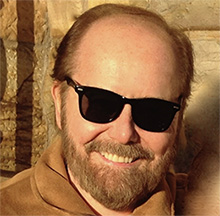
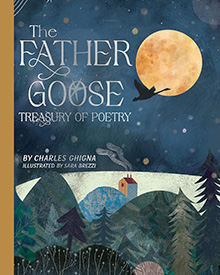
Charles Ghigna Father Goose ® lives in a tree house in the middle of Alabama. He is a poet, children’s author, and nationally syndicated feature writer with more than one hundred books published by Random House, Disney, Scholastic, and Simon & Schuster, from the Pulitzer Prize nominee Returning to Earth to the popular children’s books The Very Hungry Caterpillar’s First Poems illustrated by Eric Carle and The Father Goose Treasury of Poetry for Children.